SpeedRack—adigitalgarageforcollectors
A collector-first automotive commerce platform that turns browsing, buying and belonging into one connected experience. Built around a simple promise: small cars can carry big stories.
Role
Product strategy · UX/UI · Design system
Platform
Responsive automotive commerce
Audience
Collectors, enthusiasts and hobbyists
Tools
Figma · Research · Prototyping
Scope
Commerce · Collection · Community
Year
2026
The problem was bigger than selling miniature cars.
Most collectible stores behave like dense catalogues. They help people transact, but rarely support the emotional side of the hobby: discovering a rare model, understanding its story, displaying a collection and meeting people who care about the same machines. SpeedRack needed to balance product depth with fast shopping while giving collectors a reason to return after checkout.
How might a digital storefront feel like entering a premium garage — without sacrificing clarity, speed or trust?
Research became a connected experience model.
The shared process work framed SpeedRack as three products working together: an e-commerce destination, a personal collection tool and an automotive community. User needs were translated into five moments that could guide both the information architecture and the interface system.
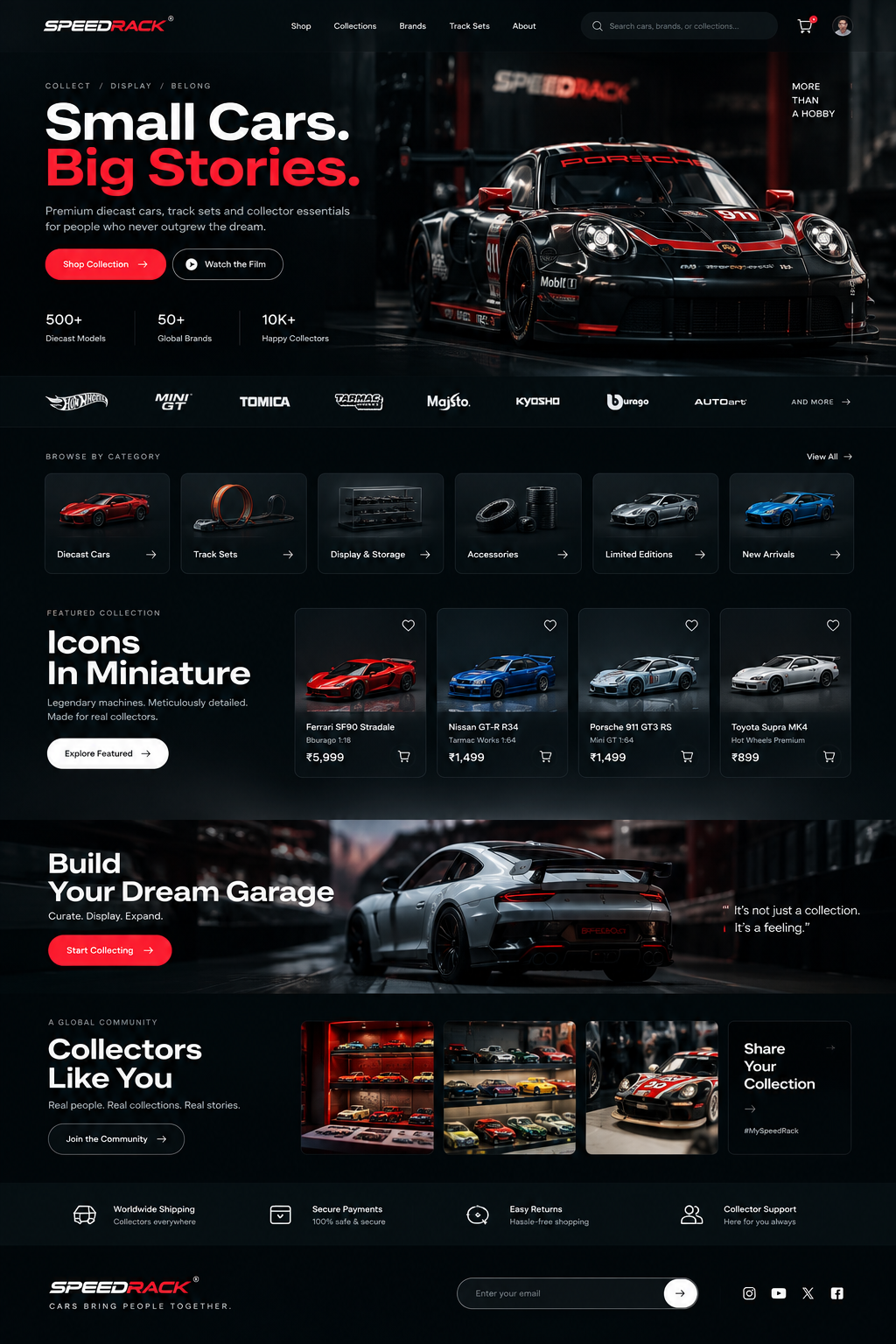
Discover
A cinematic storefront, category-led browsing and useful catalogue filters.
Evaluate
Collector-scale imagery, specifications, reviews, rarity and related models.
Collect
Wishlist, Dream Garage and profile tools that make ownership visible.
Convert
A focused cart and checkout path with clear totals, trust and next steps.
Belong
Community, support and membership experiences that continue after purchase.
From intent to interface
The design process moved from problem framing to a reusable system rather than jumping directly into polished screens. Each phase narrowed a decision: what collectors need, where it belongs and how the interface should communicate it.
01
Discover
Frame the collector problem, business opportunity and competitive landscape.
02
Define
Map audiences, goals, information architecture and priority journeys.
03
Structure
Build shopping, collection, membership and support flows before styling.
04
Design
Translate speed, precision and exclusivity into a responsive visual language.
05
Systemise
Create reusable foundations, components, patterns and interface states.
06
Validate
Review hierarchy, task clarity, accessibility and cross-screen consistency.
Discovery starts with desire, then earns utility.
The homepage creates an immediate emotional entry through cinematic automotive imagery and concise brand language. It then moves into categories, featured models, collection-building and community proof. The catalogue shifts to high-density comparison with filters for brand, scale, price, availability and collection.
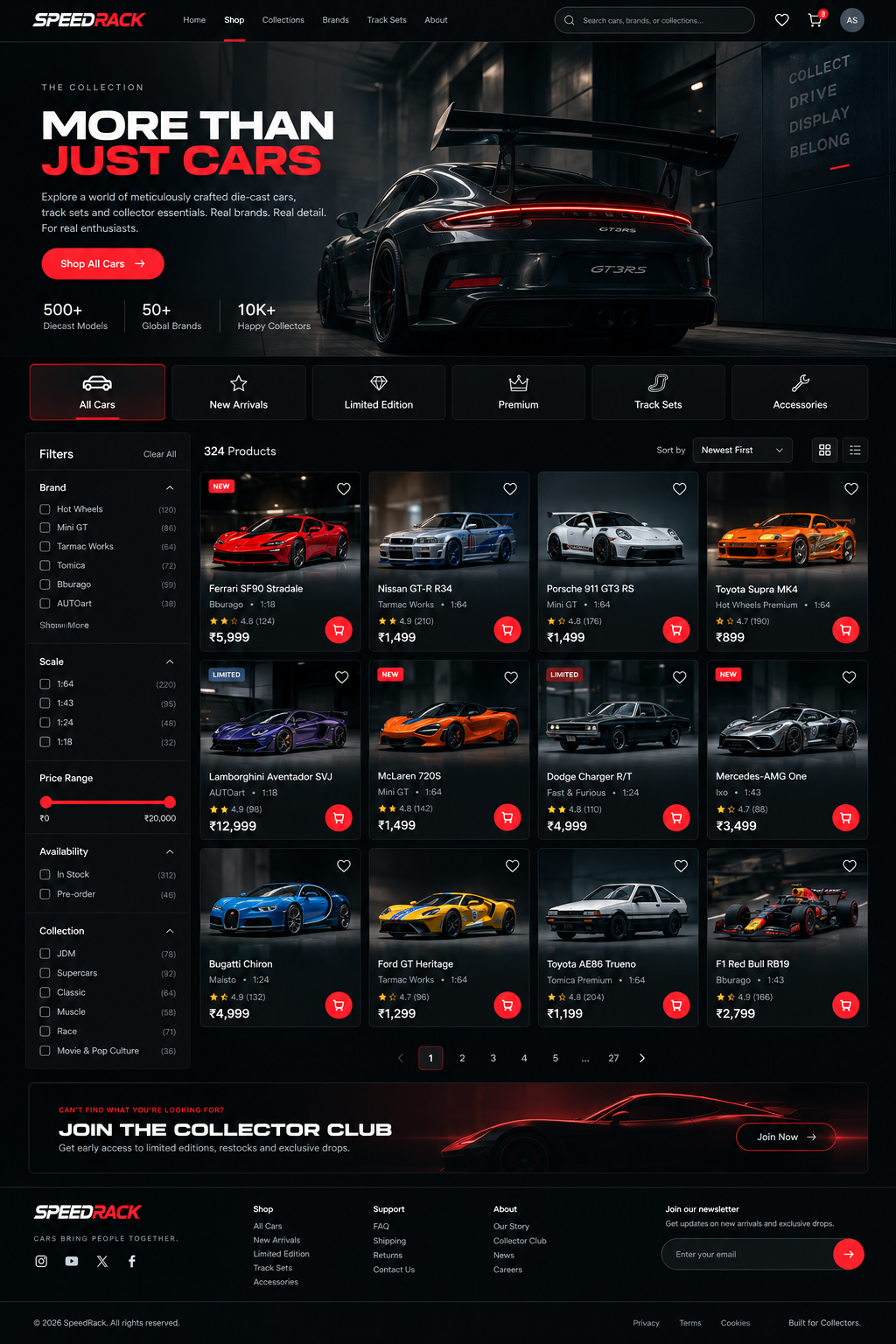
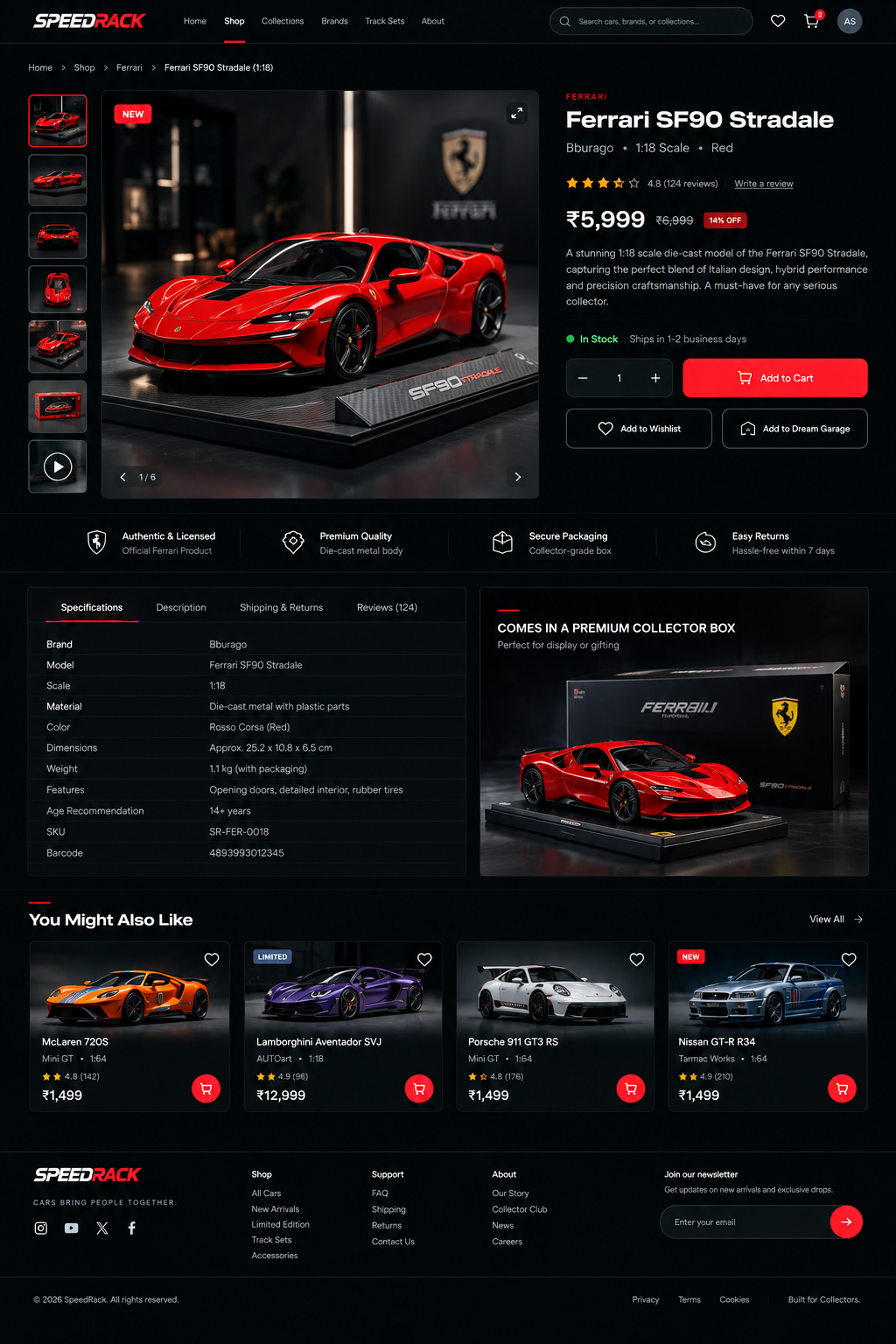
Product detail turns specifications into collectibility.
The model page combines large product imagery, thumbnail navigation, price and stock status with scale, material, colour, dimensions and collector-grade packaging. Wishlist and Dream Garage actions acknowledge that purchase is only one part of the collecting journey.
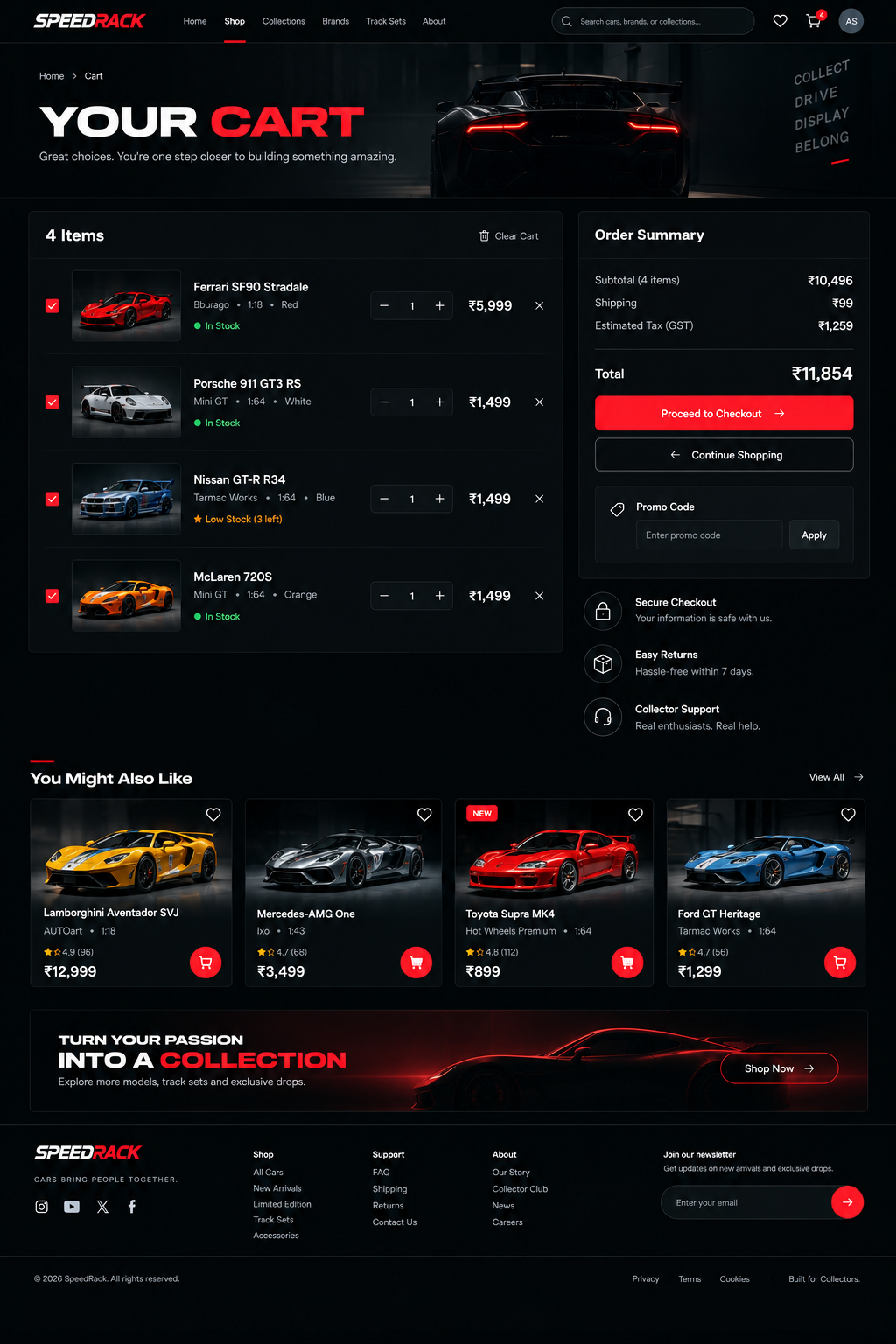
Checkout removes drama from the final decision.
Once the collector commits, the visual noise drops. Product, quantity, stock, pricing and removal stay easy to scan; the order summary isolates shipping, tax, total and the primary next step. Trust cues for secure payment, returns and support sit exactly where hesitation is most likely.
The relationship continues after purchase.
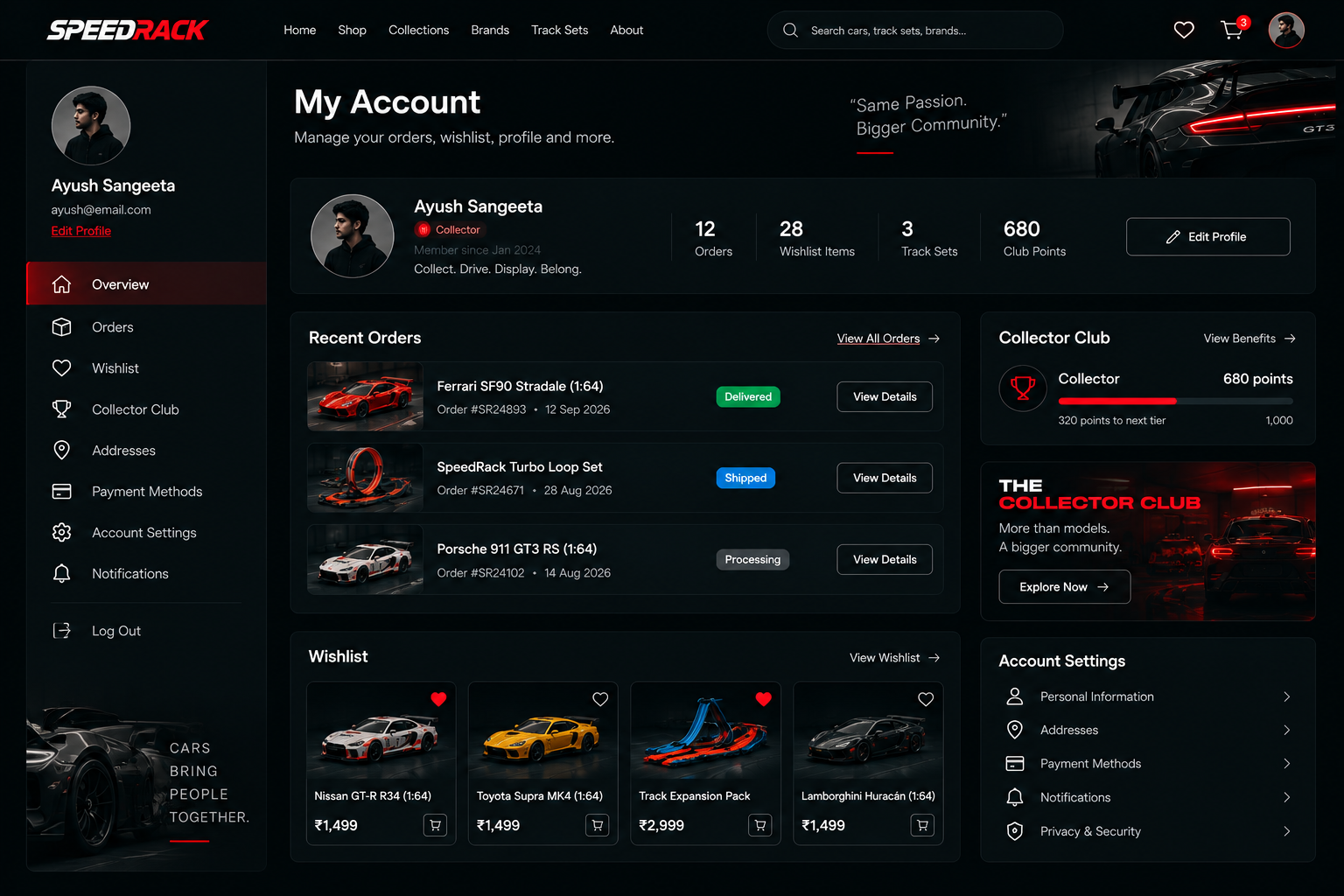
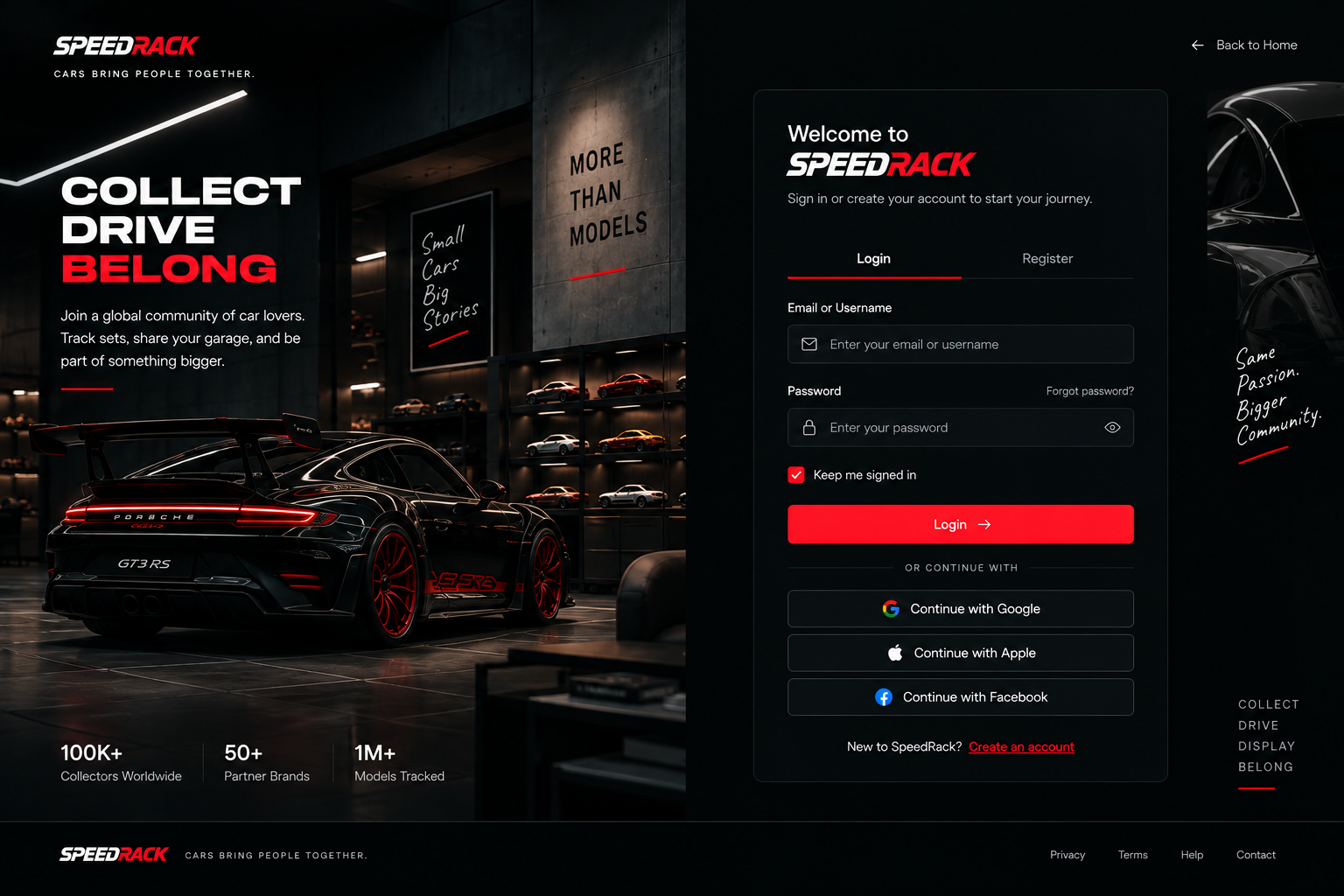
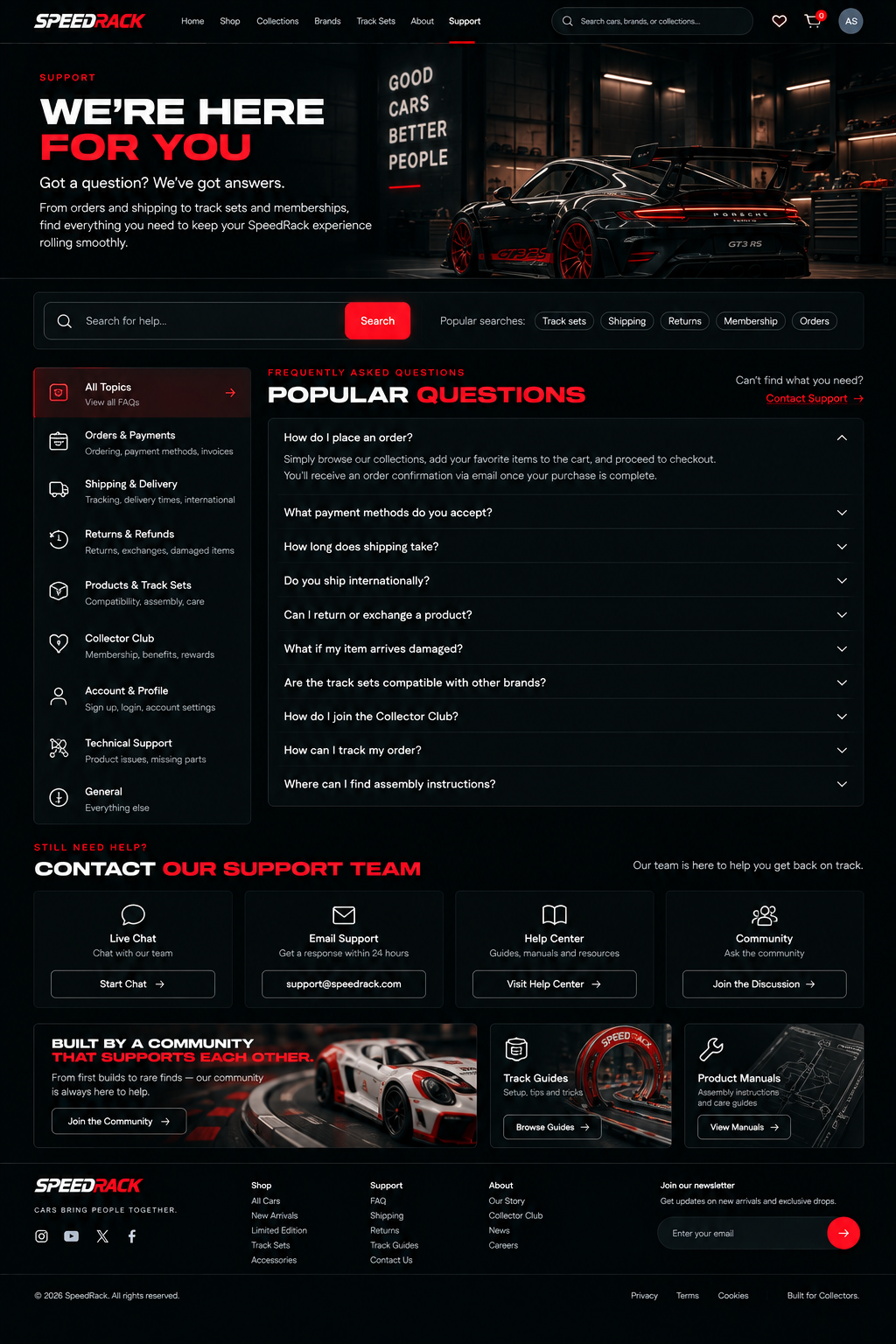
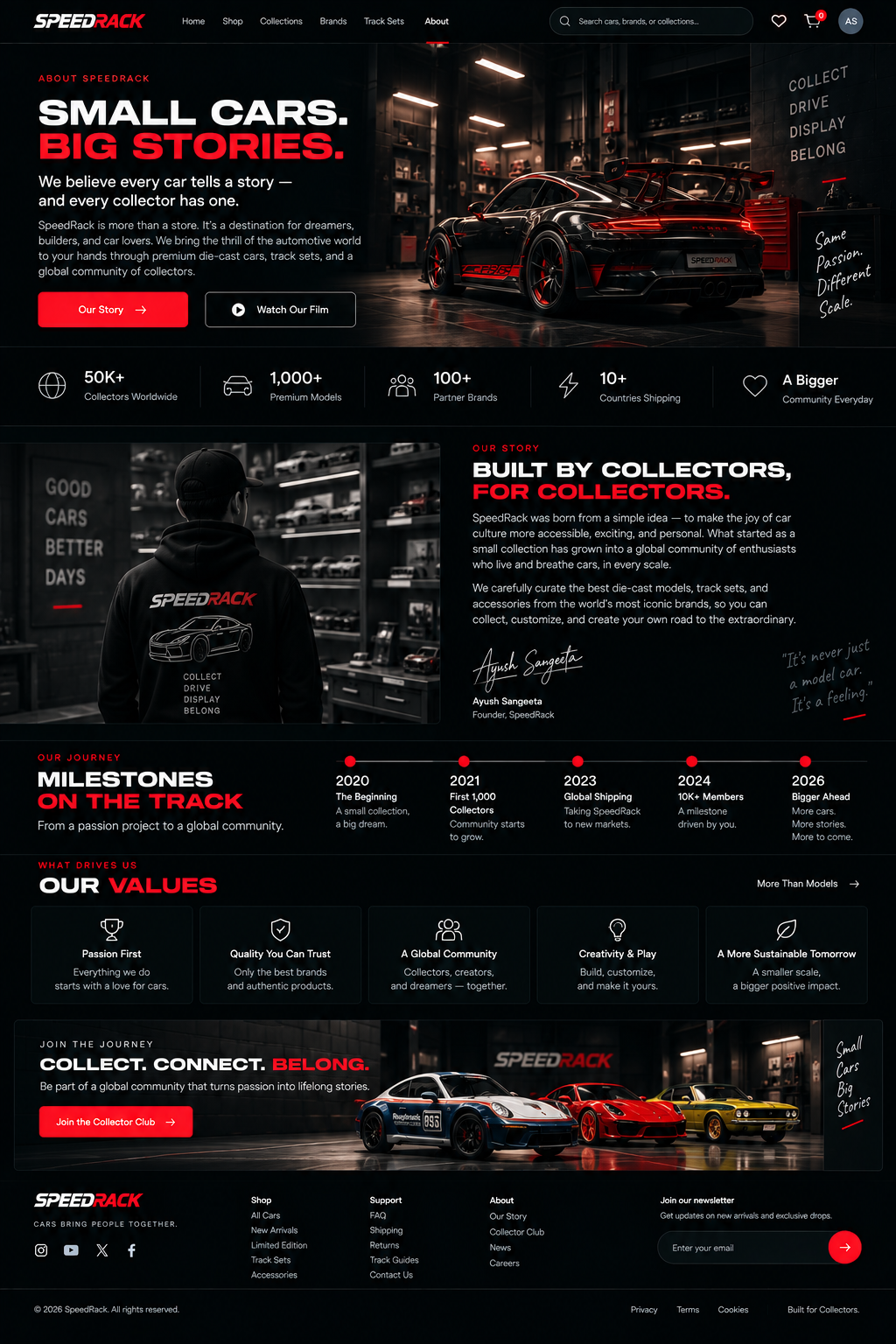
SpeedRack treats identity, membership and support as core product areas. The profile brings orders, wishlist, points and settings together. The support hub combines search, topic navigation, FAQs and direct help. The brand story positions every collector as part of a wider culture rather than another customer record.
A system designed to scale beyond eight screens.
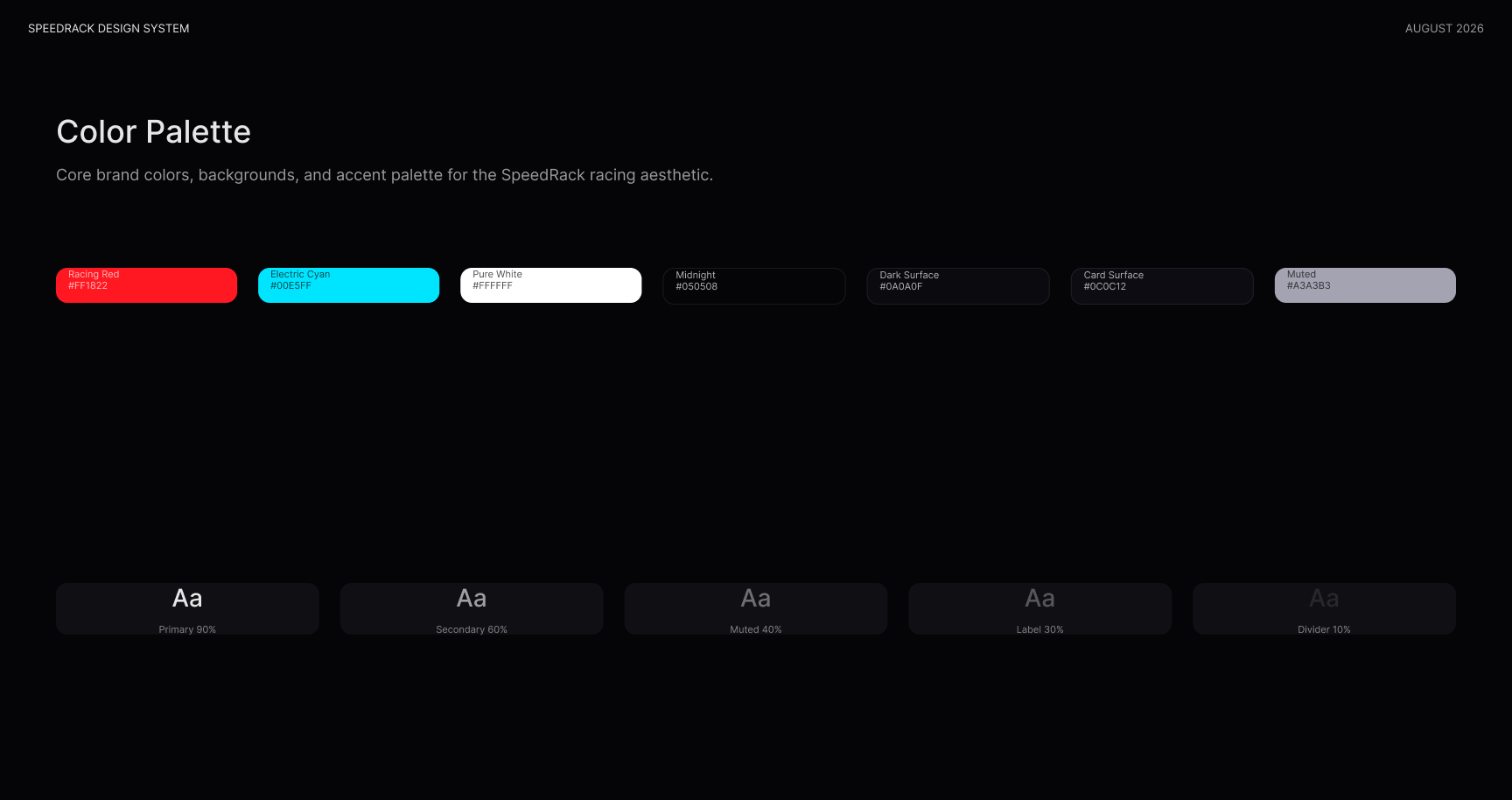
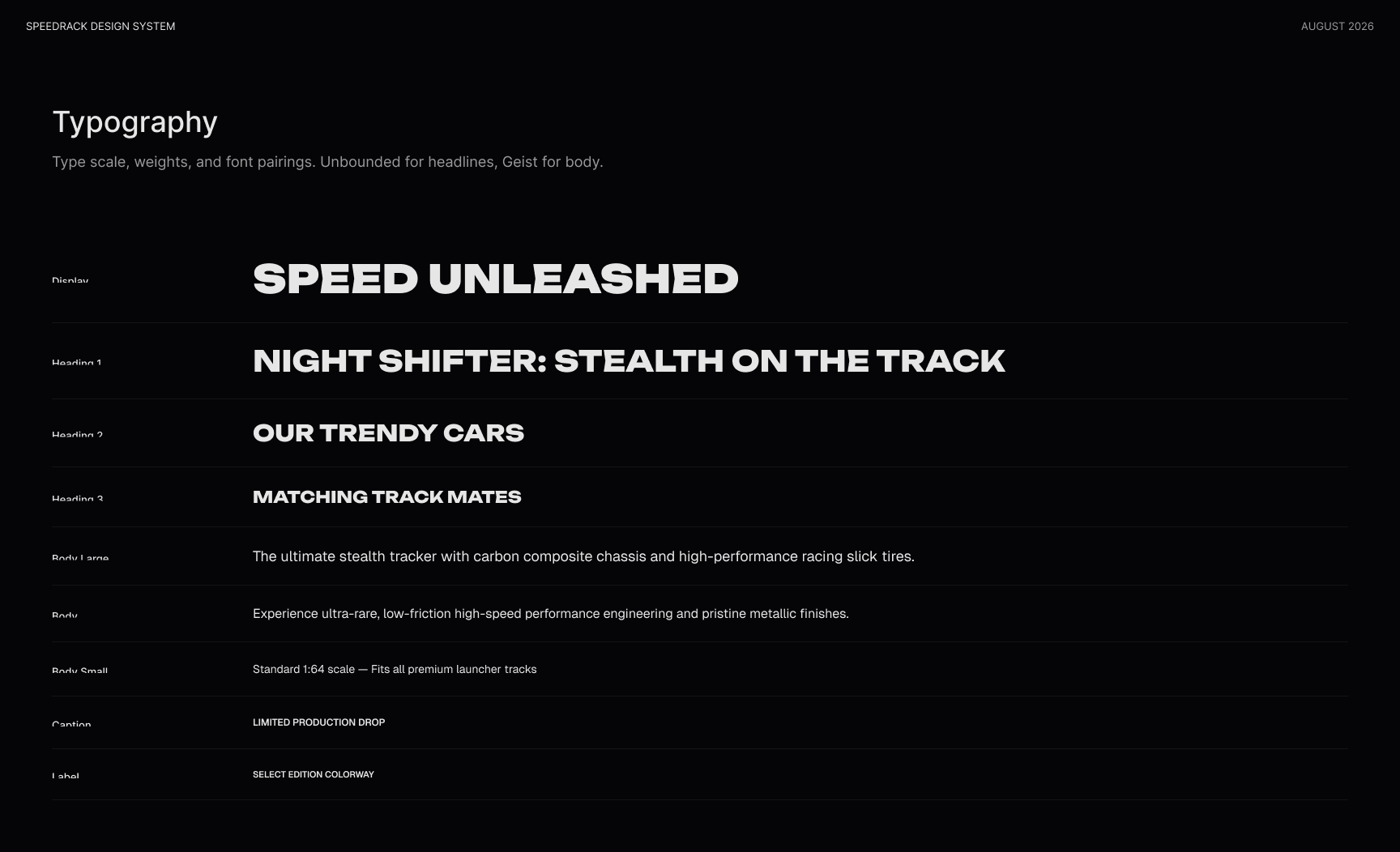
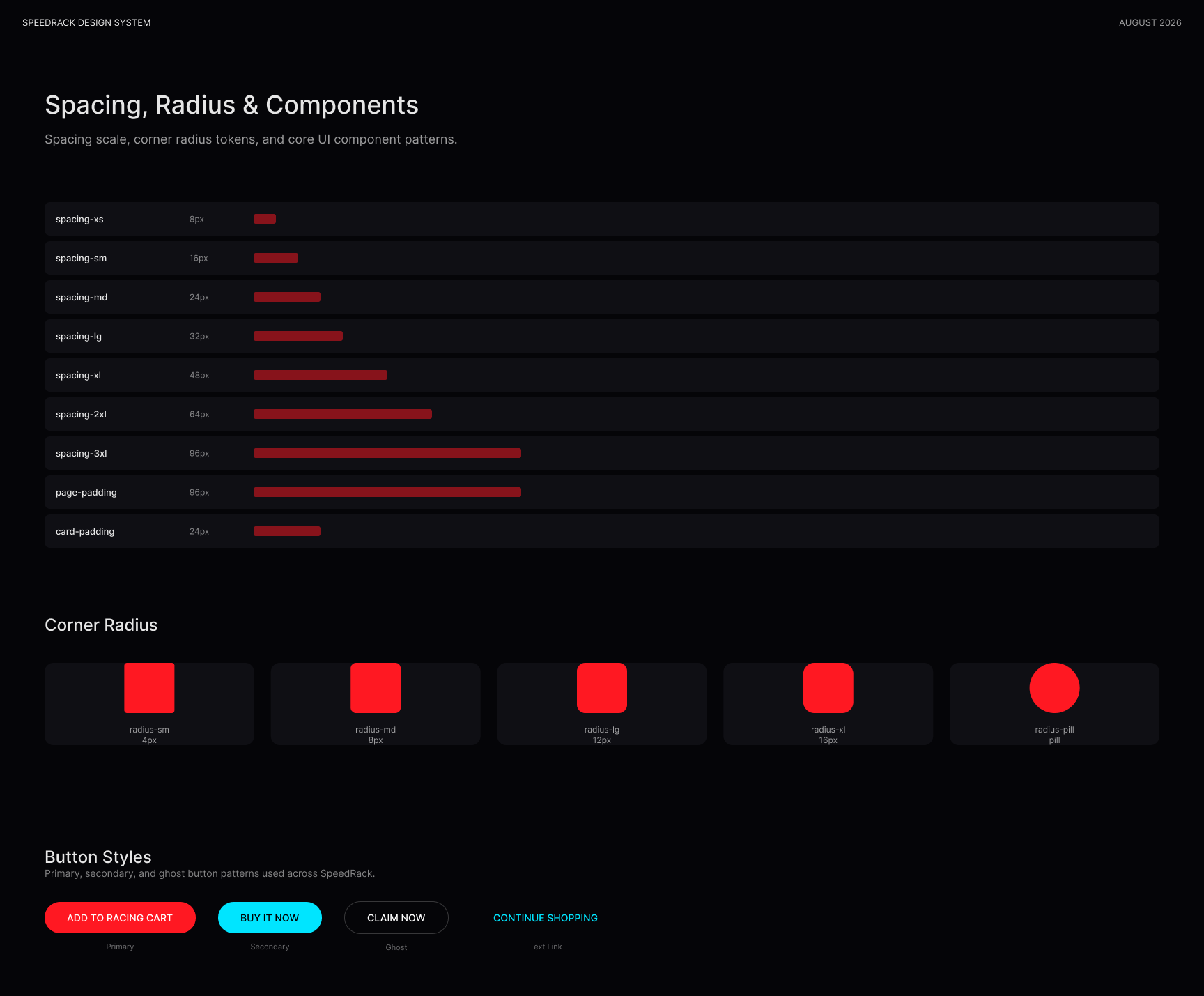
The companion design-system and component documents define the foundations, responsive behaviour and state hierarchy needed to keep future product work consistent. The result is not one visual template; it is a set of rules for building new SpeedRack experiences without losing speed, precision or collector character.
Foundations
Colour, typography, spacing, radius, elevation and iconography.
Actions
Primary, secondary, ghost and icon controls with complete interaction states.
Commerce
Product cards, filters, quantity controls, pricing, badges and order summaries.
Navigation
Global header, search, tabs, breadcrumbs, pagination and account navigation.
Forms
Inputs, password fields, checkboxes, selectors, validation and checkout patterns.
Feedback
Alerts, toasts, status badges, skeletons, empty states and support responses.
The outcome: a store that behaves like a community.
SpeedRack connects acquisition and retention through one coherent system. Discovery feels aspirational, product decisions stay evidence-led, checkout remains direct and post-purchase tools reward continued participation. The final experience is commercial without becoming transactional — a place to collect, drive, display and belong.
Small cars. Big stories.
SpeedRack was designed as a digital garage where product, passion and people share the same track.